Rhubarb is a popular ingredient in British cuisine, often used in sweet dishes like crumbles, pies, and compotes. In addition to its unique taste and culinary adaptability, rhubarb is popular in the UK because it grows well in the British climate, with its cold winters and mild summers. It’s popularity is also partly due to its long-standing presence in British gardens, where it has been grown and enjoyed for generations, fostering a sense of nostalgia and tradition in British cuisine.
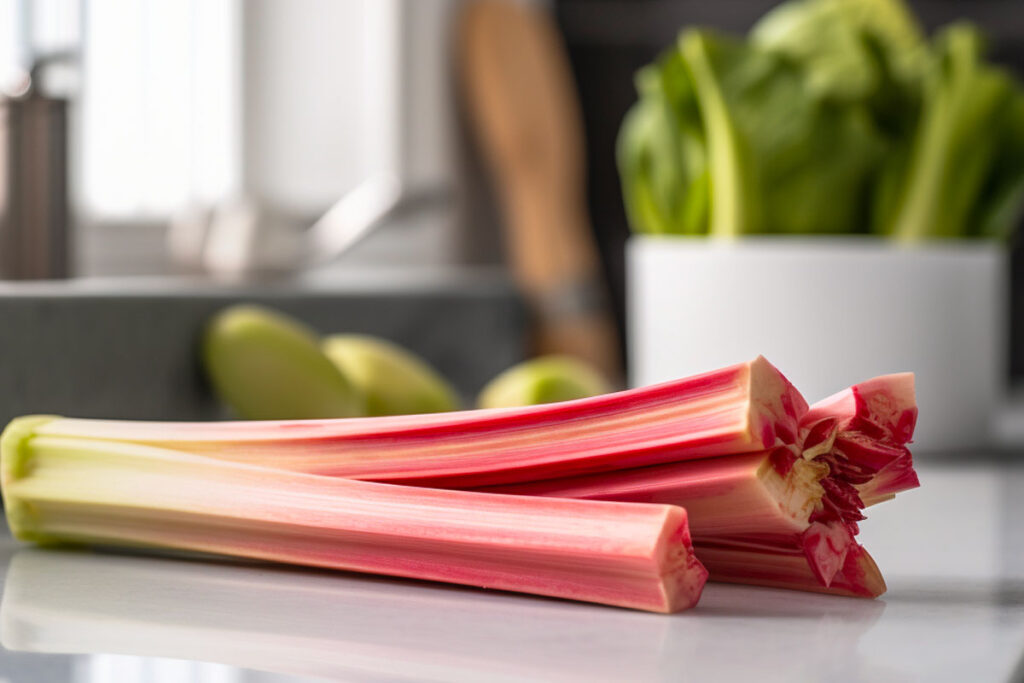
While the stalks are edible, the leaves are toxic due to high levels of oxalic acid, so they should be removed and discarded before cooking. Rhubarb is a perennial plant belonging to the Polygonaceae family, with a unique tangy taste and bright red or green stalks. Its scientific name is Rheum rhabarbarum, and it is native to Siberia.
Recipes
Rhubarb can be used in a variety of delicious recipes. Here are some popular options:
Rhubarb Crumble
A classic British dessert, rhubarb crumble features a layer of tangy rhubarb filling topped with a buttery crumb mixture. Serve warm with custard or ice cream for a comforting treat.
Rhubarb and Ginger Jam
This zesty jam is perfect for spreading on toast or scones. The combination of rhubarb and ginger creates a unique flavour that is both tangy and slightly spicy.
Blackberry and Rhubarb Jam
Combine the tangy flavour of your rhubarb with the sweet taste of blackberries in this delightful homemade jam. The unique pairing creates a vibrant, fruity spread that’s perfect for slathering on toast, scones, or even used as a filling in cakes and pastries.
Rhubarb and Strawberry Pie
Combine rhubarb with sweet, ripe strawberries for a delectable pie filling. Encase the mixture in a flaky pastry crust and bake until golden brown for a mouthwatering dessert.
Rhubarb Compote
Rhubarb compote is a versatile condiment that can be served with yogurt, ice cream, or as a topping for pancakes and waffles. Simply cook chopped rhubarb with sugar and a splash of water until soft and tender, then adjust the sweetness to your taste.
Rhubarb and Custard Cake
This delightful cake features a moist, vanilla sponge filled with pockets of tangy rhubarb and topped with a creamy custard frosting. It’s a perfect dessert for a special occasion or afternoon tea.
Rhubarb Chutney
Rhubarb chutney is a savoury condiment that pairs well with cheeses, cold cuts, and grilled meats. To make it, cook rhubarb with onions, vinegar, sugar, and spices until thickened and rich in flavour.
These are just a few of the many ways you can enjoy rhubarb in your culinary creations. Remember to always remove and discard the leaves before using the stalks, and enjoy experimenting with this versatile ingredient.
Storage and Preservation
Proper storage and preservation methods can help you enjoy rhubarb throughout the year. Here are a few tips on storing and preserving:
- Fresh Storage: To store fresh rhubarb, wrap the stalks in a damp paper towel and place them in a plastic bag. Store the bag in the vegetable crisper drawer of your refrigerator. Rhubarb should keep for up to two weeks when stored this way.
- Freezing: Rhubarb can be frozen for long-term storage. To do so, wash the stalks and cut them into 1-inch (2.5 cm) pieces. Spread the pieces in a single layer on a baking tray and place the tray in the freezer. Once the rhubarb is fully frozen, transfer the pieces to an airtight container or freezer bag and store them in the freezer for up to one year.
- Canning: Rhubarb can be canned in the form of jams, chutneys, or compotes. Follow proper canning procedures and guidelines to ensure safe preservation. Home-canned rhubarb products can last up to a year when stored in a cool, dark place.
- Dehydrating: Dehydrating rhubarb is another option for long-term storage. Slice the stalks into thin pieces and place them in a food dehydrator. Once the rhubarb is completely dry, store it in an airtight container in a cool, dark place. Dried rhubarb can be rehydrated and used in recipes, or enjoyed as a chewy, tangy snack.
Nutrition and Health Benefits
Rhubarb is not only a versatile ingredient but also offers a range of health benefits. It is low in calories and high in fibre, making it a great addition to a healthy diet. Additionally, rhubarb contains essential nutrients such as vitamin C, vitamin K, calcium, and potassium. It is also a source of antioxidants, which may help protect against oxidative stress and chronic diseases.
While rhubarb offers many health benefits, it is important to remember that its leaves are toxic and should never be consumed. Always remove and discard the leaves before using rhubarb in your recipes.
With its unique tangy flavour and numerous culinary uses, rhubarb is a wonderful addition to your home garden and kitchen. Experiment with different recipes and preservation methods to enjoy this versatile ingredient all year long.
Home Garden Growing Tips
Growing rhubarb in your home garden can be a rewarding experience. It thrives in temperate climates and can tolerate a range of soil types. Follow these tips to grow a healthy rhubarb plant:
- Planting: Choose a sunny, well-drained location to plant your rhubarb. It is best to plant rhubarb crowns in early spring or autumn. Dig a hole about 4 inches (10 cm) deep and 3 feet (90 cm) apart, placing the crowns with the buds facing up.
- Soil: Rhubarb prefers fertile, well-drained soil with a pH between 6.0 and 6.8. Incorporate compost or well-rotted manure into the soil to improve fertility and drainage.
- Watering: Rhubarb needs consistent watering, especially during dry periods. Water your plant deeply once a week, ensuring the soil remains moist but not waterlogged.
- Fertilising: Apply a balanced, all-purpose fertiliser in early spring and again in late summer to maintain soil fertility and encourage healthy growth.
- Harvesting: Allow the plant to establish itself for the first two years before harvesting any stalks. In the third year, you can start harvesting stalks from late spring to early summer. To harvest, gently pull the stalk away from the base of the plant, or use a sharp knife to cut it at soil level.
- Pest and Disease Control: Rhubarb is relatively pest-free, but watch out for slugs, snails, and aphids. Remove any affected leaves and use organic pest control methods to manage infestations.